MyHairAI
- 4.2
- Rating
- 10.00K
- Installs
- Free
- Price

 Analysis by App-foxy
I approached MyHairAI as a practical beauty app rather than a miracle treatment. Its central idea is simple: use artificial intelligence to help people think about hair loss. That makes it immediately relevant to anyone who has noticed extra shedding, a widening part, thinner-looking hair, or changes that are difficult to judge from day to day. My experience with apps in this area is that the useful ones are not the ones that create the most dramatic promises; they are the ones that help users observe changes calmly and decide what to do next.
This app comes from Myhair and is available free of charge for everyone. It belongs to the beauty category, runs on Android 8.0 and later, and the current release is version 1.6.2. It has reached over ten thousand installs and holds a 4.2 average from more than five hundred ratings, which suggests that a meaningful group of users has found it worthwhile, while also leaving room for a balanced assessment rather than treating it as universally perfect.
What MyHairAI is really useful for
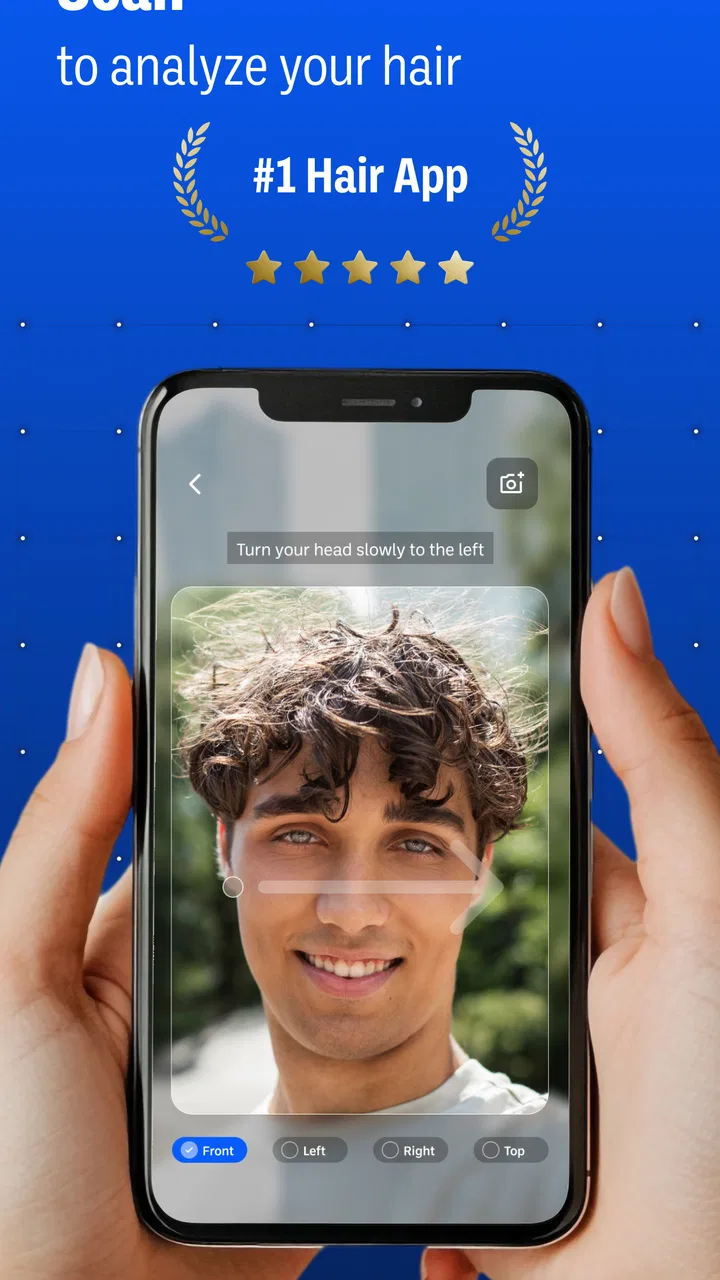
The strongest way to use this app is as a personal observation tool. Hair loss is unusually hard to assess because our attention changes from one mirror visit to the next. Lighting, hairstyle, wetness, hair length, and even the angle of a photograph can make the scalp look noticeably different. An AI-based app can give that observation process more structure, but it should not replace a dermatologist or turn a visual estimate into a medical diagnosis.
You May Also Like

 AccuWeather: Weather Radar
AccuWeather Review: A Quick, Clear Forecast for Everyday Decisions
For everyday plans, the best forecast is the one you can understand quickly. AccuWeather makes rain timing, radar, and local conditions easy to act on, with a few trade-offs.

 Hill Climb Racing
Why Hill Climb Racing Still Turns Crashes Into One More Run
A tiny car, a bumpy hill and one more upgrade: Hill Climb Racing keeps resurfacing because its simple chaos makes every near-miss feel personal.

 AliExpress - Shopping App
AliExpress Makes Global Shopping Feel Personal, but Shoppers Bear the Risk
AliExpress turns a global marketplace into a pocket-sized discovery engine. Its reach is useful, its shopping loop compelling, and its trade-offs easy to miss.

 Lords Mobile: Kingdom Wars
Lords Mobile Is a Kingdom-Building Routine, Not a Quick Match
A case-by-case verdict on the building, battles, device demands, and social commitments that make Lords Mobile rewarding for some players and exhausting for others.

 PDF Scanner app - TapScanner
TapScanner Makes Paperwork Easier to Capture, Check, and Share
TapScanner makes scanning with a phone feel less like a rescue operation and more like a dependable step in getting work done. Its capture tools are useful, though not flawless.

 Block Blast!
 Shows How Much a Puzzle Game Can Leave Out
A quiet grid game shows why puzzle players increasingly value instant clarity, repeatable skill and low-pressure play—and where the genre still needs to catch up.
More From Our News Desk
View All News


That distinction matters. Someone who wants a quick way to organize concerns about thinning may appreciate the app. Someone expecting it to identify the exact cause of hair loss, prescribe a treatment, or guarantee regrowth is likely to be disappointed. The phrase “fight hair loss” gives the product a clear purpose, but the sensible interpretation is assistance with awareness and decision-making, not a substitute for clinical care.
I would especially recommend trying it when your concern is gradual and difficult to describe. For example, if you keep wondering whether your temples are changing but cannot tell from memory, a consistent app-based routine may be more useful than taking random selfies. The value comes from comparing observations made under similar conditions, not from treating one result as definitive.
Why consistency matters more than a single result
A realistic everyday scenario would be someone who notices more hair in the shower during a stressful month. Instead of checking the mirror repeatedly, that person could use the app at a planned interval, with similar lighting and a similar hairstyle, then discuss persistent concerns with a professional if they continue. This approach reduces the temptation to react emotionally to every strand or every visually unflattering photograph.
My practical tip is to choose one place with steady light and avoid changing several variables at once. Do not compare a bright overhead image with a dim side-lit one and assume the difference represents actual hair change. Keep the hair dry or wet in a consistent way, keep the camera distance similar, and make notes about unusual circumstances such as recent illness, major stress, or a new routine. The app can support observation, but the quality of the observation still depends heavily on the user.
This is one of the less obvious trade-offs of an AI beauty tool: automation may make comparisons easier, but it can also create false confidence. A polished result feels objective even when the image itself is inconsistent. I would trust a pattern repeated over time more than a single score, label, or visual impression.
How it compares with familiar alternatives
The usual alternatives are a mirror, a phone camera, a notes app, online searches, or a visit to a medical professional. A mirror is immediate but poor for long-term comparison. Ordinary photos offer more control, yet they require the user to organize them and judge them without much guidance. Online searches can provide background information, although they often encourage anxious self-diagnosis. A dermatologist remains the better choice when the change is sudden, severe, painful, patchy, or accompanied by scalp symptoms.
MyHairAI sits between casual photos and professional advice. Its appeal is convenience: it gives the concern a dedicated place instead of leaving everything scattered across a camera roll and a search history. Its weakness is the same as that of other visual AI tools: it works from what can be seen, while the reasons behind hair loss may involve factors that an image cannot reveal.
That makes the app more suitable for preparation than for a final answer. Before an appointment, a user may find it helpful to organize observations and describe how the appearance has changed. The app should support a clearer conversation, not replace that conversation.
Trust begins with what the app asks you to do
Hair images can feel personal even when they do not show the whole face. They may reveal age-related features, styling habits, scalp condition, or other details that a user would not casually share. Because of that, I would pay close attention during setup and normal use to every visible request for access, every upload choice, and every explanation shown before an image is processed.
I cannot responsibly turn a beauty app’s purpose into assumptions about its privacy practices. The important habit is to inspect the actual choices presented on your device. If the app asks for access that seems unrelated to the task, pause before accepting it. If it offers a way to select an image manually instead of opening a broader library, choose the narrower option. If a screen explains how an image is handled, read it rather than tapping through automatically.
The most trustworthy routine is the one where you understand each image decision before confirming it. That means checking whether you are taking a new photograph or selecting an existing one, noticing whether the app offers a preview, and avoiding pictures that contain other people or unnecessary personal details. A tightly cropped image of the relevant hair area may be more appropriate than a casual photograph that includes your home, family, or identifying background.
Permissions and account choices deserve attention
Users often treat permissions as a one-time nuisance, but they are part of the product experience. On Android, permission controls can be reviewed and changed later through system settings. I would use that control deliberately: grant only what is needed for the action you are performing, and revisit access if you stop using the feature that required it.
The same cautious approach applies to accounts. If the app presents an account option, look at whether signing in is necessary for the function you want or simply convenient for continuity. An account can be useful if you need your information available across sessions, but it also creates a stronger connection between your activity and an identity. If the app lets you continue without an account, that may be preferable for a one-time exploration. If an account is required, read the on-screen explanation and make sure you know how to manage it later.
I would also avoid assuming that deleting an image, uninstalling the app, or signing out all mean the same thing. Those actions can have different effects in different services. Look for visible controls related to history, saved results, account settings, and deletion, and use the wording shown inside the app rather than relying on guesswork.
Moments when data sensitivity is highest
The most sensitive moment is the first image submission, especially if the photograph includes your full face. Before taking it, remove unrelated people from the frame and consider whether the app really needs more of you than the hair area. A neutral background also makes the image easier to compare later and limits accidental disclosure of personal surroundings.
A second sensitive moment comes when sharing results. A screenshot may contain more than the result itself, including a profile name, device information, timestamps, or other interface details. Before sending anything to a friend or posting it publicly, inspect the entire image. I would share only what is necessary, and I would not use a public post as a substitute for professional advice.
A third moment is when changing phones or reinstalling. If your observations matter to you, decide in advance whether you want to preserve them, export anything the app visibly allows you to keep, or start fresh. Do not assume that an app will retain a history forever, and do not assume that uninstalling will erase every associated record. The safest approach is to use the controls the app actually displays and keep personal notes when continuity is important.
These steps may sound cautious for a beauty app, but hair concerns are personal and sometimes emotionally difficult. Good privacy habits are not an accusation against MyHairAI; they are a sensible way to use any tool that processes personal photographs or health-adjacent concerns.
Where the app helps, and where it can frustrate
The main strength is focus. Instead of using a general camera, a general journal, and scattered web searches, you get a purpose-built place for a concern that is easy to postpone. The free price also lowers the barrier to trying it, particularly for someone who wants to see whether an AI-assisted approach feels useful before committing to a paid service.
Another strength is psychological distance. When worry is vague, a structured check can help turn it into a specific question: does the appearance seem stable, is there a pattern worth documenting, or should I arrange an appointment? That is a healthier use than repeatedly checking under different lights.
The friction is that visual analysis has limits. Hair can be styled to conceal thinning, compressed by a hat, altered by product, or made to appear fuller or flatter depending on moisture. A user who expects a precise explanation may find the experience too narrow. There is also a risk of overchecking. If you use the app every day, normal variation may become a source of anxiety instead of useful evidence.
I would set a personal schedule before beginning. A planned review is more informative than compulsive checking, and it protects the app from becoming another source of reassurance-seeking. If the process makes you more worried rather than more organized, that is a clear sign to step back and speak with a qualified professional instead.
Who should try it and who should choose something else
MyHairAI is a good fit for adults who want a focused way to observe visible hair changes, prefer a mobile workflow, and understand that AI feedback is not a diagnosis. It may also suit someone preparing for a medical appointment who wants to describe a gradual concern more clearly. The Everyone content rating makes it broadly accessible, although younger users with persistent or distressing symptoms should involve a parent, guardian, or healthcare professional rather than managing the issue alone.
I would skip it if you are looking for treatment instructions, a confirmed medical cause, or an immediate answer to sudden hair loss. I would also choose a dermatologist first if there are bald patches, inflammation, pain, bleeding, or a rapid change. A general photo journal may be better for someone who wants complete manual control, while a clinic is better for someone who needs examination, medical history, or laboratory assessment.
For privacy-sensitive users, the right decision depends on the controls visible during use. Review the permissions, image workflow, account options, and deletion controls before submitting anything personal. If those choices do not feel clear enough for your comfort, do not force yourself to use the app simply because it is convenient.
My final view after weighing convenience against caution
I see MyHairAI as a useful first step for organized observation, not as an authority on the health of your hair. Its free access and focused purpose make it easy to test, and its rating of 4.2 from over five hundred ratings indicates that many users have responded positively. The developer, Myhair, has positioned it clearly within beauty technology, but the responsibility for interpreting results still belongs with the user and, when needed, a medical professional.
My recommendation is to use it slowly and deliberately: prepare consistent images, minimize unnecessary personal information, review every permission and account choice, and treat repeated patterns as more meaningful than isolated feedback. Keep a separate note of relevant life changes if you want a fuller picture, because an image alone cannot explain every cause of shedding.
In short, I would recommend giving it a try if you want a convenient way to turn a vague hair concern into a more orderly observation routine. I would not recommend relying on it for diagnosis or treatment decisions. Its real value is helping you ask better questions, while its real limitation is that a photograph cannot tell the whole story.
FAQs for MyHairAI
01What is MyHairAI and how does it work?
MyHairAI is an innovative app designed to help users experiment with different hairstyles using AI technology. By uploading a photo, the app analyzes facial features and offers a variety of hairstyles and colors that suit the user. It’s a virtual makeover tool that helps users visualize potential new looks before committing to a haircut or color change.
02Is MyHairAI free to use, or does it require a subscription?
MyHairAI offers a free version with basic features, allowing users to try out a limited number of hairstyles. For access to its full range of styles, colors, and the latest updates, users can opt for a monthly or annual subscription. The premium version also removes ads and provides priority customer support.
03How accurate are the hairstyle recommendations in MyHairAI?
The accuracy of MyHairAI’s recommendations relies on its advanced AI algorithm, which considers facial shape and personal preferences. While the app provides realistic visualizations, actual results may vary based on individual hair texture and length. Users find it helpful for inspiration, but consulting with a professional stylist is advisable for final decisions.
04Can MyHairAI be used on all devices?
MyHairAI is available for both Android and iOS platforms, ensuring compatibility with a wide range of smartphones and tablets. Users should ensure their device meets the minimum system requirements for optimal performance. Regular updates are provided to enhance compatibility and introduce new features.
05What data does MyHairAI collect, and is it safe for users?
MyHairAI collects minimal data necessary for functionality, such as uploaded photos for hairstyle trials. The app is committed to user privacy, employing encryption to protect data. Users can review the app’s privacy policy for detailed information on data handling practices. It's important to always use secure internet connections when uploading personal images.
Pros
- Highly accurate hairstyle predictions.
- User-friendly interface with intuitive design.
- Wide range of hairstyle options to try.
- Seamless integration with social media.
- Regular updates with new features.
Cons
- Limited customization for hair colors.
- Requires a stable internet connection.
- Some features are locked behind paywalls.
- Occasional crashes on older devices.
- Ads can be intrusive at times.

MyHairAI
Gallery